
According to the National Associate For Collage Admission Counseling (NACAC) 2024 survey, 70% of college admission officers consider personal statements or application essays to be a moderately or considerably important factor in the admission decision process. They prioritize candidates with a similar academic profile who attach a Personal Statement or Statement of Purpose essays along with their application.
That’s not all. Over the last decade during collage application process, the importance of essays has grown significantly over the past decade. The essay component is a significant factor in selectivity for up to 25% of colleges, especially if you want to get admitted to a competitive institution.
So, if you are applying for a university, college, or graduate program, then you are most likely to submit either a personal statement or a statement of purpose (SOP). While in some cases, you are requested to submit both. If that’s the case, then worry not! We are here to help you.
Students often confuse themselves regarding the two. Well, they both seem familiar, but they serve different purposes in the admission process. Remember, knowing the difference between the two isn’t about learning academically; it’s about getting your chances of acceptance approved. Within this guide, we will help you understand the difference between the two, provide you with detail comparison, break down their definitions, highlight their key differences, and provide you with sample examples so you can attain proficiency in writing both with ease.
So let’s get started!
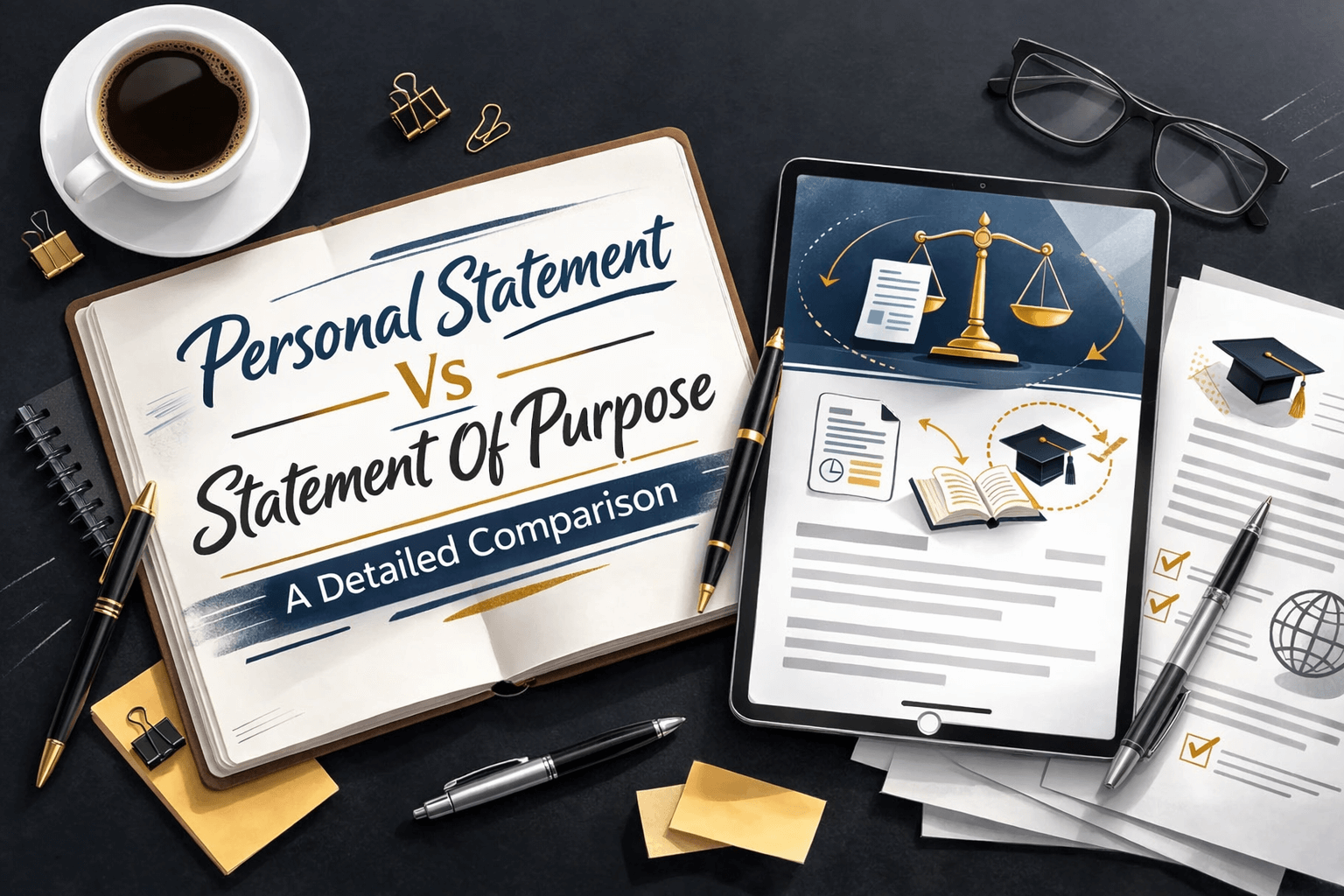
Personal Statement Vs Statement Of Purpose
Personal Statement
A personal statement is an essay explaining who you are, what your personal experiences are, and how your experiences shaped your motivation to pursue a field of study. Its conversational tone reflects that it narrates your challenges, identity, values, and presents your defining moments. It’s a narrative that explains how your experiences backed your academic interests.
So, within your personal statement, you are revealing your story. You are narrating your achievements through your passion and personal motivation. You will share your life experiences that explain your journey. You will state how resilience, growth, and self-awareness have shaped your life.
Statement Of Purpose
On the other hand statement of purpose is an academic essay, not your personal story. The essay explains what you want to do, why you want to do it, and how your academic background will help you prepare for the path you have chosen. In short, in your statement of purpose, you need to highlight and explain why the specific degree at the specific institution you intend to apply to matters to your professional ambitions so greatly. So, in an SOP, highlight academic achievements and research experience, define professional and scholarly goals, and emphasize intellectual clarity and future directions. Most importantly, you need to explain why you are the perfect fit with the institution’s specific program or faculty.
Now, let’s look into the difference between the two in detail. Head-to-head difference.
Personal Statement Vs Statement Of Purpose: Major Differences
Personal Statement
- Illustrates who you are, your journey and your motivations.
- Narrative and reflective tone.
- Narrates your personal growth, experiences, and motivations.
- Mention anecdotal detail.
- Emotional and authentic.
Statement Of Purpose (SOP)
- States your academic goals, ambitions and where you are headed towards.
- Professional, formal and structured tone.
- Focuses on future plans and academic preparation.
- Place emphasis on research experience, scholarly interest and professional goals.
- Professional and goal-oriented.
Submitting the wrong type or blending both is a common reason applications get rejected. Therefore, understanding the distinction is crucial. Mark the word; understand, analyze, and then write. It takes a lot of effort and time to write a Personal Statement or Statement of Purpose, but gets only one min to get rejected.
Oh yes, one minute!
According to a survey, admission officers spend an average of only two minutes reading a personal statement, where 39% read in one minute or less. So, within these two minutes, you will be analyzed, and when they read your personal statements, 88 % of the admission professional asses applicants’ interest in a course, 65% gain contextual information. 40% assess academic potential, and 29% assess work experience.
If you don’t want to be left out, then you need to follow a specific format. Remember, a clear professional personal statement format improves readability, SEO performance, and keeps your admission officers engaged.
Personal Statement Vs Statement Of Purpose: Recommended Format
Personal Statement
Strong Hook Opening: Begin with a meaningful experience or a defining moment that sparked your interest.
Background And Motivation: Explain how your background, environment, and challenges helped you stay motivated to shape your future goals.
Experiences: State how life, volunteer, and academic experiences helped you stay focused and learn lessons.
Skills And Growth: Emphasize your skills and state how they helped you grow.
Goals: Conclude how the program aligns with your future goals and your aspirations.
Statement Of Purpose (SOP)
Introduction: Start with your academic interest and objectives.
Educational Background: Highlight how your educational background aligns with the field/ program you intend to apply to. Also, state how you are academically prepared.
Experience: Emphasize how your research or your professional experiences matches with your future academic goal.
Why This Program/ University: This is the most important section. As you need to highlight why you have chosen this program/ university and how you are the best fit for this program.
Career Goals: In the end, you need to align your career goals with your academic goals. Make them interlinked and structured.
Clarity, specificity, direction, and readiness are the real charm. So, focus on it, and you will be right there. Remember, according to an analyst review, strong essays can increase admission chances many times over, especially at highly selective institutions. Strong personal essays have a higher acceptance rate for borderline applicants.
Tips For Writing A Personal Statement And Statement Of Purpose
If you want to increase your chances of acceptance, then you need to put in your effort, time, and show personalization. Tailor it according to the institution’s mission and align it with the program you intend to apply for. Create an impact by hitting straight on the ground. Most importantly, avoid generic storytelling and link your experiences with concrete examples. It would not only strengthen credibility but also create the right impression you intend to create. Lastly, sloppy essays are bad. They will harm your chances, so before handing over, get it proofread by expert writers.
Start early
Be specific, do not beat around the bush
balance narrative and reflection
Proofread thoroughly
Remember, you just have a minute to make an impact, so start strong and finish with confidence.
In case you have been asked to submit both, then act wisely and remember:
Personal statement: explain why you chose your field and what personal experiences shaped you
Statement of purpose: explain how your academic journey and research align with the program offerings.
Do not repeat the same content in both essays. Treat them interchangeable or else you will weaken your application.
Conclusion
Personal Statement and Statement of Purpose both serve as an essential part in academic application, but they serve different roles. Understanding the differences helps you prepare and craft essays authentically. It also helps you stay aligned with the admission committee’s genuine evaluation rubrics. Stay strong and write confidently. A personal statement states who you are and how your experiences shaped your goals, whereas a statement of Purpose reveals what you plan to do and how you are academically prepared to do it.


