

By the EssaySouq CIPD Team | Reviewed by writers holding CIPD qualifications with UAE HR industry experience
Last updated: June 2026 | 15 min read
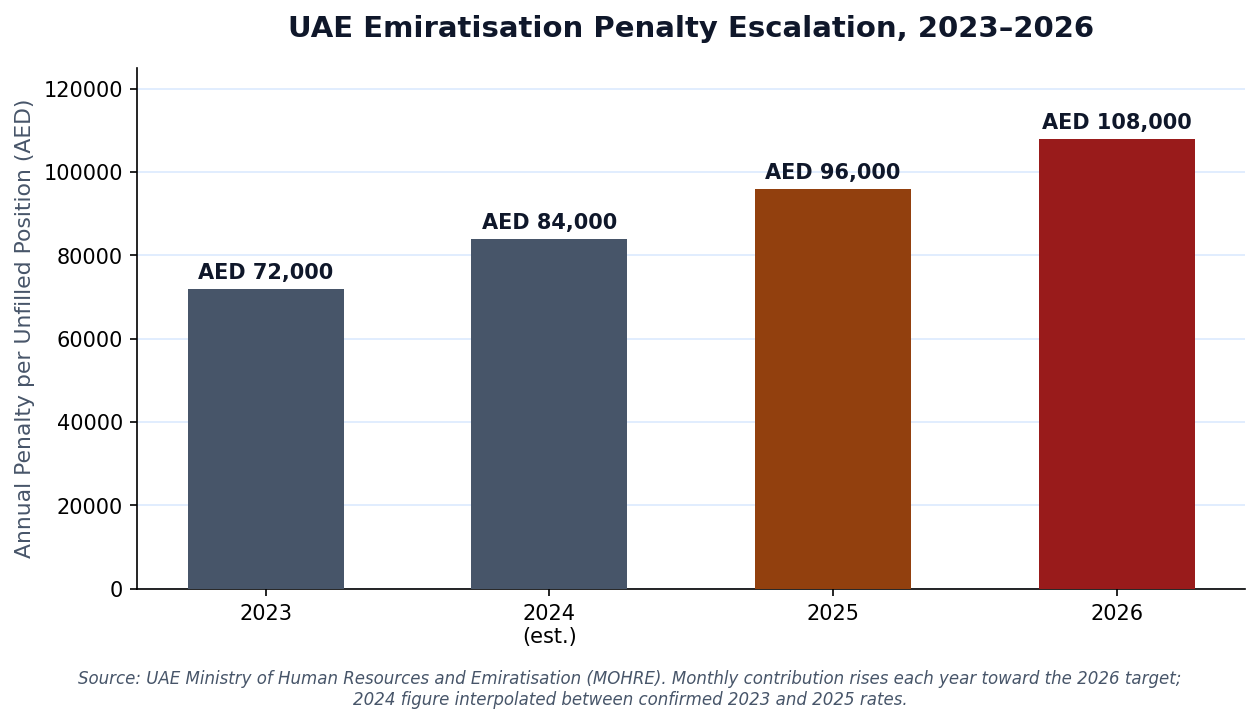
Choosing the right HR certification in the UAE has never mattered more. With private sector Emiratisation quotas now requiring companies of 50 or more employees to reach 10% Emirati representation in skilled roles by the end of 2026, up from a 2022 baseline, and non-compliance penalties reaching AED 108,000 per year for every missing position, demand for certified, compliance-literate HR professionals is at an all-time high across Dubai, Abu Dhabi, and the wider UAE.
Whether you are a university student pursuing HR alongside your degree, or a working professional looking to formalise your expertise, this guide compares the leading HR certifications available in 2026: CIPD, SHRM-CP, SHRM-SCP, HRCI’s PHR and SPHR, and GPHR, so you can choose the one that best fits your career goals.
| Already enrolled and struggling with your CIPD assignments? EssaySouq’s CIPD-qualified writers are available 24/7 to support you across every Level 3, 5, and 7 unit. |
This guide was compiled by our CIPD support team, who work daily with UAE-based HR students and professionals and regularly field questions about which certification pathway best fits their career stage and target employer. Every figure below is drawn from a named, verifiable source, and clearly flagged where UAE-specific data was not available.
Best Time to Pursue an HR Certification in the UAE
The UAE’s HR landscape has changed substantially in recent years. Emiratisation enforcement has moved from guidelines to active monthly monitoring, and the compliance burden this creates has made certified, standards-literate HR professionals genuinely difficult to find.
Key market indicators driving HR certification demand in the UAE in 2026:
- Private sector companies with 50 or more employees must reach 10% Emiratisation in skilled roles by 31 December 2026, up from a 2022 baseline, according to the UAE Ministry of Human Resources and Emiratisation (MOHRE)
- Monthly financial contributions for each unfilled Emirati position reached AED 9,000 in 2026, up from AED 6,000 in 2023, meaning a company short by one position pays AED 108,000 per year
- More than 152,000 Emiratis were employed across over 29,000 private sector companies by June 2025, according to MOHRE data reported by workforce advisory firm Departer
- The UAE recorded a 46% Net Employment Outlook in Q1 2026, the third strongest hiring outlook globally after Brazil and India, according to the ManpowerGroup Employment Outlook Survey
- 58% of UAE professionals received a salary increase in 2025, up from 51% the year before, and 70% of employers plan to increase headcount in 2026, according to the Hays GCC Salary Guide 2026, based on more than 1,600 employers and professionals surveyed across the Gulf
- HR professionals who hold a SHRM certification report earning salaries 14% to 15% higher than uncertified peers, according to the 2022 SHRM HR Careers Study
Put simply, the UAE’s regulatory direction and continued hiring momentum have created a genuinely strong market for certified HR professionals right now.
1. CIPD: Chartered Institute of Personnel and Development
| Best for: Students and professionals in the UAE seeking the most widely recognised HR qualification pathway in the region, with a clear route from foundation level through to chartered senior status.
Key facts:
Salary in the UAE:
Career roles: HR Assistant, HR Advisor, HR Business Partner, HR Manager, Learning and Development Manager, Head of HR. CIPD is the strongest starting point for UAE-based HR careers specifically because of how deeply it has penetrated the regional job market, and because its unit structure (5HR01 Employment Relationship Management, 5CO02 Evidence-Based Practice, and others) maps closely to what UAE employers actually expect from HR practitioners. |
2. SHRM-CP: SHRM Certified Professional
| Best for: Operational HR professionals in the UAE who want a globally recognised, US-headquartered alternative to CIPD, particularly valuable at US multinationals operating in Dubai and Abu Dhabi.
Key facts:
Salary in the UAE:
Career roles: HR Generalist, HR Business Partner, Talent Acquisition Specialist, HR Coordinator, Compensation and Benefits Analyst. SHRM-CP is particularly well regarded at international companies operating in Dubai and Abu Dhabi, and is frequently listed alongside CIPD in UAE HR job postings as an accepted alternative credential. |
3. SHRM-SCP: SHRM Senior Certified Professional
| Best for: Experienced HR professionals in the UAE targeting senior leadership roles involving strategy, policy-making, and organisational-level decision-making.
Key facts:
Salary in the UAE:
Career roles: HR Director, Head of HR, VP People, Chief Human Resources Officer (CHRO), HR Strategy Consultant. SHRM-SCP is best suited to HR professionals already operating at a senior level who want a credential that specifically validates strategic capability, distinct from CIPD Level 7, which some UAE employers view as a complementary rather than competing credential. |
4. PHR: Professional in Human Resources
| Best for: Mid-career HR professionals, roughly 1 to 4 years of experience, who want a US-recognised credential focused on operational and technical HR knowledge.
Key facts:
Salary in the UAE:
Career roles: HR Generalist, HR Specialist, HR Coordinator, Compensation Analyst, Employee Relations Specialist. PHR is a reasonable entry point for UAE-based professionals targeting US-headquartered employers specifically, though its US-law-centric content makes it a less natural fit for UAE labour law compliance work than CIPD or SHRM. |
5. SPHR: Senior Professional in Human Resources
| Best for: Senior HR professionals with 4 to 7 years of experience (depending on education level) who want a US-recognised credential validating strategic and policy-making HR expertise.
Key facts:
Salary in the UAE:
Career roles: HR Director, VP Human Resources, Chief Human Resources Officer, Senior HR Consultant, Head of Talent. Both SPHR and GPHR hold significant standing in the UAE according to regional HR training providers, and are particularly valued at multinational corporations and large local organisations seeking innovative, strategically minded HR leadership. |
6. GPHR: Global Professional in Human Resources
| Best for: HR professionals managing multinational teams or cross-border HR responsibilities, a genuinely strong fit for the UAE’s expatriate-majority private sector workforce.
Key facts:
Salary in the UAE:
Career roles: Global HR Director, International HR Business Partner, Expatriate Programme Manager, Global Mobility Manager, Regional Head of HR. For a workforce as internationally diverse as the UAE’s, where expatriates make up the large majority of the private sector, GPHR is one of the most directly relevant credentials available, provided your role genuinely involves multi-country HR responsibility rather than single-market UAE HR practice. |
Quick Comparison: Best HR Certifications for UAE Professionals (2026)
Here is a side-by-side comparison to help you decide:
| Certification | Issuing Body | Level | UAE Relevance | Best For |
| CIPD | CIPD (UK) | Foundation to Chartered (3 levels) | Very High, most listed UAE HR qualification | General UAE HR career pathway |
| SHRM-CP | SHRM (USA) | Operational | High, strong at MNCs | HR generalists and business partners |
| SHRM-SCP | SHRM (USA) | Senior/Strategic | High, strong at MNCs | Senior HR leadership |
| PHR | HRCI (USA) | Mid-career | Moderate, US-law focused | US-headquartered employers |
| SPHR | HRCI (USA) | Senior/Strategic | High | HR Director and CHRO roles |
| GPHR | HRCI (USA) | Global/Multinational | High, given expat-majority workforce | Cross-border HR roles |
Where Are UAE Employers Hiring Certified HR Professionals?
Understanding which employers actively build large in-house HR functions in the UAE helps you target your certification choice and job search more effectively.
Al-Futtaim Group
Established in Dubai in the 1930s, Al-Futtaim Group is one of the region’s most diversified privately held businesses, structured across automotive, financial services, real estate, retail, and healthcare divisions, employing more than 35,000 people across over 20 countries in the Middle East, Asia, and Africa. A workforce of this size and diversity requires a substantial in-house HR function spanning talent acquisition, employee relations, and workforce planning.
Majid Al Futtaim
Majid Al Futtaim, the operator behind Mall of the Emirates, VOX Cinemas, and the Carrefour franchise across the Middle East, describes itself as one of the UAE’s largest employers and states directly on its own careers platform that it is committed to supporting the UAE government’s Emiratisation drive. For HR professionals with Emiratisation compliance experience specifically, this kind of large, multi-sector employer is a natural target.
Beyond these two conglomerates, government-linked entities and free zone authorities including DIFC Authority and Abu Dhabi government bodies also maintain dedicated HR specialist functions, as do HR and recruitment agencies such as Michael Page HR and Cooper Fitch, which place certified HR professionals across every seniority level in the UAE market.
The HR Tech Boom: New HR Roles Beyond Traditional Departments
The UAE’s HR technology sector is creating a new category of HR-adjacent roles, People Analytics Specialist, HR Systems Manager, Workforce Data Analyst, that combine HR certification knowledge with digital and data literacy.
Bayzat
Founded in Dubai in 2013, Bayzat has grown into one of the UAE’s most established HR technology platforms, combining HR management, payroll, and employee benefits and insurance into a single cloud-based system. The company has raised more than USD 60 million in total funding, including a USD 25 million Series C round in December 2022, backed by investors including Point72 Ventures and Mubadala Capital, and serves several thousand business customers across the UAE and wider GCC. Bayzat and similar platforms are actively hiring HR professionals who understand both certification-level HR principles and how to translate them into system configuration and workforce analytics.
Other notable HR technology platforms with a genuine UAE presence include ZenHR, built specifically for GCC and Arab-world labour law compliance, Darwinbox, a fast-growing enterprise HCM platform with an expanding Middle East footprint, and newer UAE-based HR tech startups including Qureos, Ogram, and RemotePass, all of which are creating roles at the intersection of certified HR practice and technology.
How Emiratisation Is Reshaping the HR Job Market
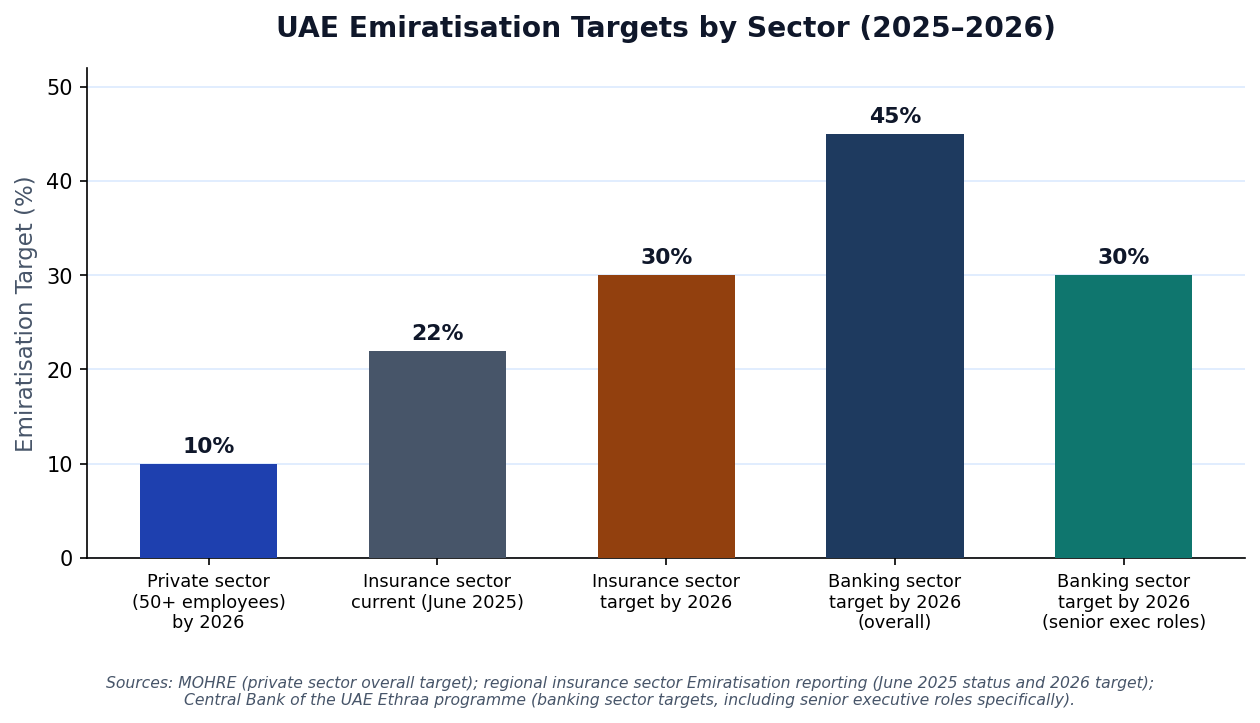
The UAE’s Emiratisation programme has created a structural, ongoing shift in what employers need from HR professionals. Private sector companies with 50 or more employees must reach 10% Emirati representation in skilled roles by the end of 2026, and the monthly financial contribution for each unfilled position has climbed to AED 9,000 in 2026, up from AED 6,000 when the scaled penalty system began in 2023.
Sector-specific targets add further complexity. The banking sector, under the Central Bank of the UAE’s Ethraa programme, targets 45% Emiratisation by 2026, including a specific 30% target for senior executive roles. The insurance sector reached approximately 22% Emiratisation as of June 2025, working toward a 30% target by the end of 2026 and 50% to 60% by 2027 to 2030 depending on company size.
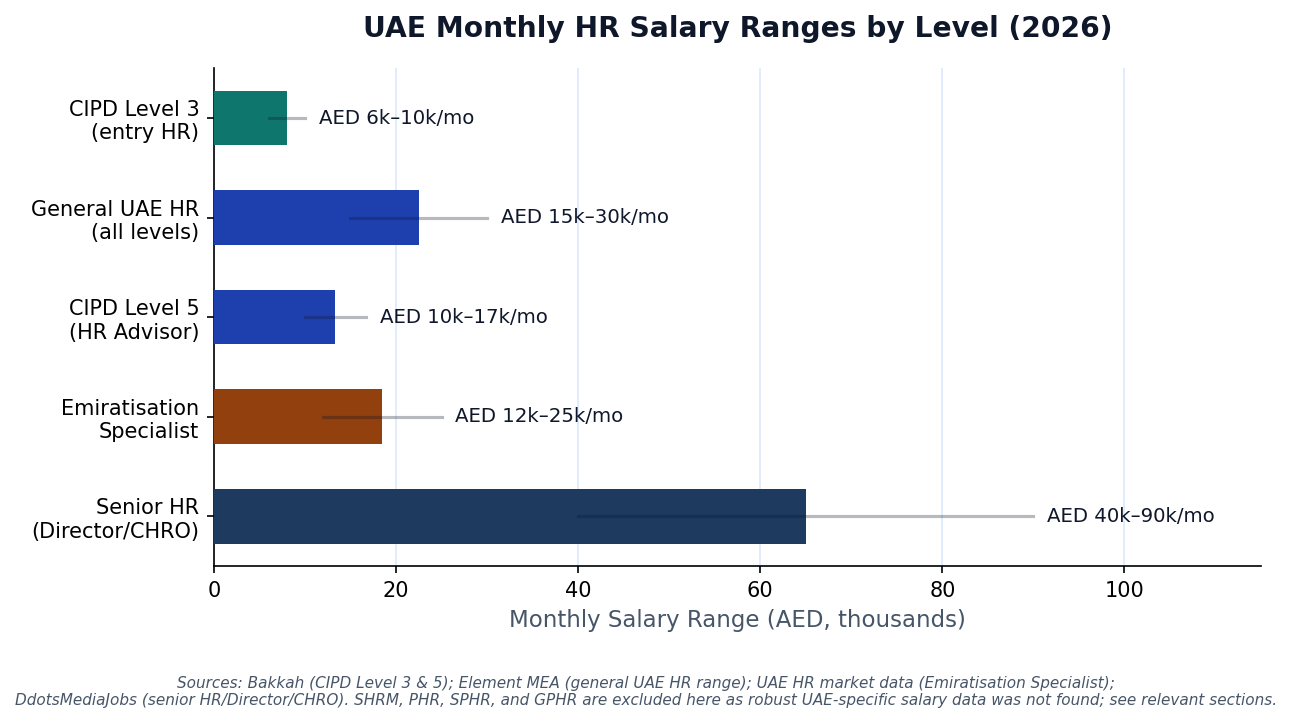
This regulatory complexity has created sustained demand for a specific, newer HR specialism: Emiratisation Compliance Specialists, who command a premium given the direct regulatory requirement, with experienced practitioners earning approximately AED 12,000 to 25,000 per month according to UAE HR market data. A CIPD, SHRM, or HRCI certification combined with genuine Emiratisation compliance experience is one of the strongest, most specific credentials a UAE-based HR professional can currently hold.
Which HR Certification Is Right for You in the UAE?
Here is a simple decision guide based on your career goals:
- You want the most widely recognised HR qualification across the UAE job market: Choose CIPD. It is the certification most consistently listed on UAE HR job postings and offers a clear progression path from Level 3 through to Chartered status.
- You want to work at a US-headquartered multinational operating in the UAE: SHRM-CP or PHR give you the strongest alignment with how US companies structure and assess HR practice.
- You are already in a senior HR role and want a credential that reflects it: SHRM-SCP or SPHR, depending on whether you prefer the SHRM or HRCI framework.
- Your role involves managing HR across multiple countries or a large expatriate workforce: GPHR is the most directly relevant credential available for this specific responsibility.
- You are new to HR and want the lowest-barrier entry point: CIPD Level 3 Foundation Certificate requires no prior HR background and is the most common UAE starting point.
- You want to specialise in Emiratisation compliance specifically: Pair any of the above certifications with direct, demonstrable Emiratisation compliance experience, since this combination currently commands a genuine premium in the UAE market.
Struggling With Your CIPD Assignments in the UAE?
Pursuing a professional HR certification while managing university coursework, a full-time job, and daily life in the UAE is genuinely demanding. That is where EssaySouq comes in.
Our CIPD-qualified writers support students across every Level 3, 5, and 7 unit, including 5HR01 Employment Relationship Management, 5CO02 Evidence-Based Practice, and every other core and specialist unit. Every completed assignment includes a Turnitin originality report.
About This Guide: Sources and Limitations
Every statistic in this guide is drawn from a specific, named source rather than estimated or generalised. Emiratisation figures come from the UAE Ministry of Human Resources and Emiratisation (MOHRE), the Central Bank of the UAE’s Ethraa programme, and workforce advisory firm Departer. Certification and salary data comes from the 2022 SHRM HR Careers Study, HRCI-aligned training providers including AIHR and ProcessExam, CIPD training provider Bakkah, UAE salary benchmarking firm Element MEA, and Dubai recruitment data platform DdotsMediaJobs.
Where robust UAE-specific data was not available, this guide says so directly rather than substituting a global or regional figure without labelling it. This applies specifically to SPHR and GPHR salary data, both noted as reflecting global rather than confirmed UAE-specific benchmarks in their respective sections above, and the salary comparison chart in this guide deliberately excludes SHRM, PHR, SPHR, and GPHR rather than implying UAE-specific figures that do not exist.
This guide reflects data available as of June 2026. Emiratisation quotas, penalty amounts, and salary data are updated periodically by MOHRE and other bodies; we recommend verifying current figures directly with the relevant certifying body or a current UAE salary survey before making a certification decision based on compensation alone.
Frequently Asked Questions About HR Certifications in the UAE
Which HR certification is most recognised in the UAE?
CIPD is the most widely recognised HR certification in the UAE, listed as a preferred or required qualification across UAE HR job postings more consistently than any other credential. SHRM-CP and SHRM-SCP are strong alternatives, particularly at US-headquartered multinationals, while HRCI’s SPHR and GPHR are frequently preferred for director-level and above roles.
Can I study for CIPD while working full-time in the UAE?
Yes. CIPD qualifications are widely delivered through part-time and online study formats specifically designed for working professionals, and Level 3 requires no prior HR background or degree. Many UAE-based training providers deliver CIPD Level 3, 5, and 7 through evening and weekend formats to accommodate full-time employment.
How has Emiratisation impacted HR hiring in the UAE?
Emiratisation has significantly increased demand for HR professionals with UAE labour law and compliance expertise. Private sector companies with 50 or more employees must reach 10% Emirati representation in skilled roles by the end of 2026, with penalties of up to AED 108,000 annually per unfilled position. This has created a distinct, well-compensated specialism in Emiratisation compliance, alongside continued strong general demand for certified HR practitioners.
What is the difference between SHRM-CP and SHRM-SCP?
SHRM-CP is designed for HR professionals in operational, hands-on roles, covering the practical application of HR knowledge. SHRM-SCP is designed for senior HR professionals handling strategic decisions, policy-making, and organisational leadership, and generally requires more years of relevant HR experience to sit the exam.
Is GPHR worth pursuing for HR professionals in the UAE?
Yes, particularly given the UAE’s expatriate-majority private sector workforce. GPHR is specifically designed for HR professionals managing multinational or cross-border responsibilities, and regional HR training providers report it holds significant standing among UAE organisations with global operations or large expatriate teams.
How can EssaySouq help me with my CIPD studies in the UAE?
EssaySouq provides expert CIPD assignment support across every Level 3, 5, and 7 unit, delivered by writers who hold CIPD qualifications themselves. We cover unit-specific guidance including 5HR01, 5CO02, 5HR02, 5CO03, and every other core and specialist unit, with every completed assignment including a Turnitin originality report.
Final Thoughts: Your HR Career in the UAE Starts Now
The UAE in 2026 offers a genuinely strong environment for HR professionals. Emiratisation is driving structural, ongoing demand for certified, compliance-literate HR practitioners, the broader UAE job market posted one of the strongest hiring outlooks globally in early 2026, and a growing HR technology sector is creating entirely new categories of HR-adjacent roles.
Whether you choose CIPD for its unmatched regional recognition, SHRM for its global operational and strategic pathway, or HRCI’s PHR, SPHR, and GPHR for US-aligned or genuinely multinational HR responsibility, the key is to start now and get expert support when you need it.
EssaySouq is your trusted partner for CIPD assignment help and academic support across the UAE, from Dubai and Abu Dhabi to Sharjah and Al Ain. Contact EssaySouq today, available 24/7 for UAE students.